


10 Native Irish Plants Which Will Look Great in your Garden

Knautia arvensis
Why Native Plants Matter in Irish Gardens
An effective way to support biodiversity in Irish gardens is by planting some native Irish plants.
Native plants have evolved alongside Ireland’s wildlife over thousands of years. As a result, they provide the right food, shelter and breeding spaces for pollinators such as bees and butterflies, as well as birds and other beneficial insects.
Native Irish wildflowers, shrubs and trees are also naturally suited to our climate and soils, meaning they are generally hardy, low‑maintenance and well adapted to local conditions.
Here are ten native Irish plants that will look great in your garden.
_%20Raheny%20July%202025_JPEG.jpeg)
Achillea millefolium (Yarrow)
Achillea’s flat flower heads provide a nice contrast to the spires and clusters of many garden plants. Its finely divided foliage adds a soft, airy texture. It grows to about 60cm tall.
Raheny Tidy Village group grows this flower in several flowerbeds in the village.
Why grow it
-
Excellent drought tolerance once established
-
Attracts beneficial insects such as ladybirds and parasitic wasps
-
Flowers from June to September
Garden tips
Plant in a sunny, well-drained spot. Either cut back after flowering or in the spring.
Achillea millefolium, Raheny in July,
Filipendula ulmaria (Meadowsweet)
A much-loved Irish wildflower with frothy, cream-coloured blooms and a rich, sweet scent. It is growing wild on Bull Island.
Why grow it
-
Tall, elegant and strongly scented
-
Excellent for damp ground, such as the edge of a pond
-
Flowers from June to September
-
Very attractive to pollinators
Garden tips
Best suited to moist or damp soil. It grows to about 90cm. It self-seeds freely, so cut back after flowering if you want to control its spread.

Filipendula ulmaria. Botanic Gardens, in July

Geranium sanguineum, Botanic Gardens in June
Geranium sanguineum (Bloody Crane’s-bill)
Hardy geraniums are popular plants in Ireland. They are easy to grow, tend to flower for a long period and grow in many conditions. This species of geranium is native to Ireland, particularly in limestone areas, such as the Burren in County Clare.
Why grow it
-
Long flowering season
-
Excellent ground cover
-
Tough and reliable once established
Garden tips
Plant somewhere with good drainage. Ideal for under shrubs or trees. Cutting back after flowering keeps plants neat and encourages fresh growth.
Primula veris (Cowslip)
Cowslips bring gentle colour and charm in the spring, with nodding yellow flowers held above soft green leaves. It flowers from April to June.
Why grow it
-
Early nectar source for pollinators
-
Compact and easy to grow
-
Very attractive, especially en masse
Garden tips
Prefers moist soil in partial shade. Don’t cut back after flowering; instead let it self seed around the garden.

Primula veris (Cowslip), Leitrim, in April

Nymphaea alba (White Water Lily)
Water lilies are a beautiful addition to a pond. This is Ireland’s only native water lily.
Ponds are hugely valuable for wildlife, providing breeding habitat, drinking water and shelter.
Why grow it
-
Large, elegant white flowers
-
Provides shade and shelter for pond life
-
Helps keep pond water cool
Garden tips
Plant in still or slow-moving water, with the crown 1 metre below the surface. Avoid overcrowding, especially in small ponds.
Nymphaea alba, Botanic Gardens, July
Rosa rubiginosa (Sweet Briar)
A large, thorny shrub rose with pale pink flowers and strongly scented leaves, especially noticeable after rain. It can be grown as a hedge or a standalone shrub. It grows to 2.5m.
Why grow it
-
Excellent for wildlife
-
Produces hips for birds
-
Ideal for hedges and boundaries
Garden tips
If growing as a shrub, allow plenty of space. Best planted in sunny positions along boundaries or in wildlife hedges where it can grow freely.

Rosa rubiginosa, Sligo, June

Knautia arvensis (Field Scabious)
A tall, informal plant that brings lovely movement and colour to borders. Its lilac-blue flowers are a magnet for bees and butterflies.
Why grow it
-
Excellent pollinator plant
-
Flowers from summer into autumn
-
Adds height and structure
Garden tips
Plant in full sun to partial shade. At up to 1.5m tall, it suits the back of borders or meadow-style gardens. More robust and coarse-leaved than Scabiosa.
Knautia arvensis, Botanic Gardens, in June
Polystichum setiferum (Soft Shield Fern)
Ferns look great under trees. Most ferns require the soil to be moist, but this graceful fern will also grow in dry areas.
Why grow it
-
Evergreen in most winters
-
Thrives in shade
-
Excellent for difficult spots
Garden tips
Plant in full to partial shade, including dry shade. Ideal for shady borders, under trees, or woodland-style gardens. Grows to approximately 80cm x 80cm.
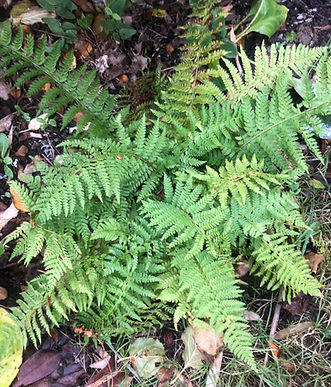
Polystichum setiferum, Malahide, November

Lythrum salicaria (Purple Loosestrife)
A striking wetland plant with tall spikes of purple-pink flowers that stand out in damp areas.
Why grow it
-
Very attractive to bees and butterflies
-
Thrives in wet soils, but also does well in normal soils
-
Elegant form
Garden tips
Ideal for pond margins or waterlogged ground. It spreads easily by seed, a bit too easily, so cut back after flowering if you wish to limit spread. Otherwise, let die back naturally.
Lythrum salicaria, Botanic Gardens, July
Matricaria maritima
A relaxed, daisy-like coastal plant often found on waste ground near the sea. Raheny Tidy Village has this planted in a flowerbed near the coast.
Why grow it
-
Tolerates salt spray and wind
-
Long flowering season
-
Informal, natural look
Garden tips
Perfect for coastal or gravel gardens with free-draining soil. The cultivar in the photo is based on a native species and suits informal planting schemes.

Matricaria maritima, Raheny, July
Even planting one or two native Irish species in your garden, mixed with other plants can make a real difference for wildlife in Raheny.
If you’d like inspiration, I'd recommend the the Wild Ireland section of the Botanic Gardens in Glasnevin. It is an excellent place to see many native plants growing together in a natural setting.
Read more about Raheny Tidy Village Group's Biodiversity Plan here.
Written by Elaine Staveley, The Plant Planner, Garden Design and Consultancy